
What is a Digital Twin for Buildings?
A Digital Twin is a digital representation of a physical building with complete integration of operational data, sensors, and lifecycle information. Unlike a simple 3D model (which only shows geometry), a Digital Twin integrates real-time data, maintenance histories, energy consumption, sensor measurements, and predictive analytics.
A 3D model shows the building as a static object. A Digital Twin is "alive": it continuously updates, responds to sensor data, predicts failures, and optimizes operations. This data integration is the core of modern facility management and Industry 4.0 for buildings.
The value: A Digital Twin enables 35% reduction in unplanned maintenance (McKinsey), 20–30% energy savings through predictive control, faster error location, and data-driven operational decisions. It is the foundation of smart buildings, BIM in operations, and asset management.
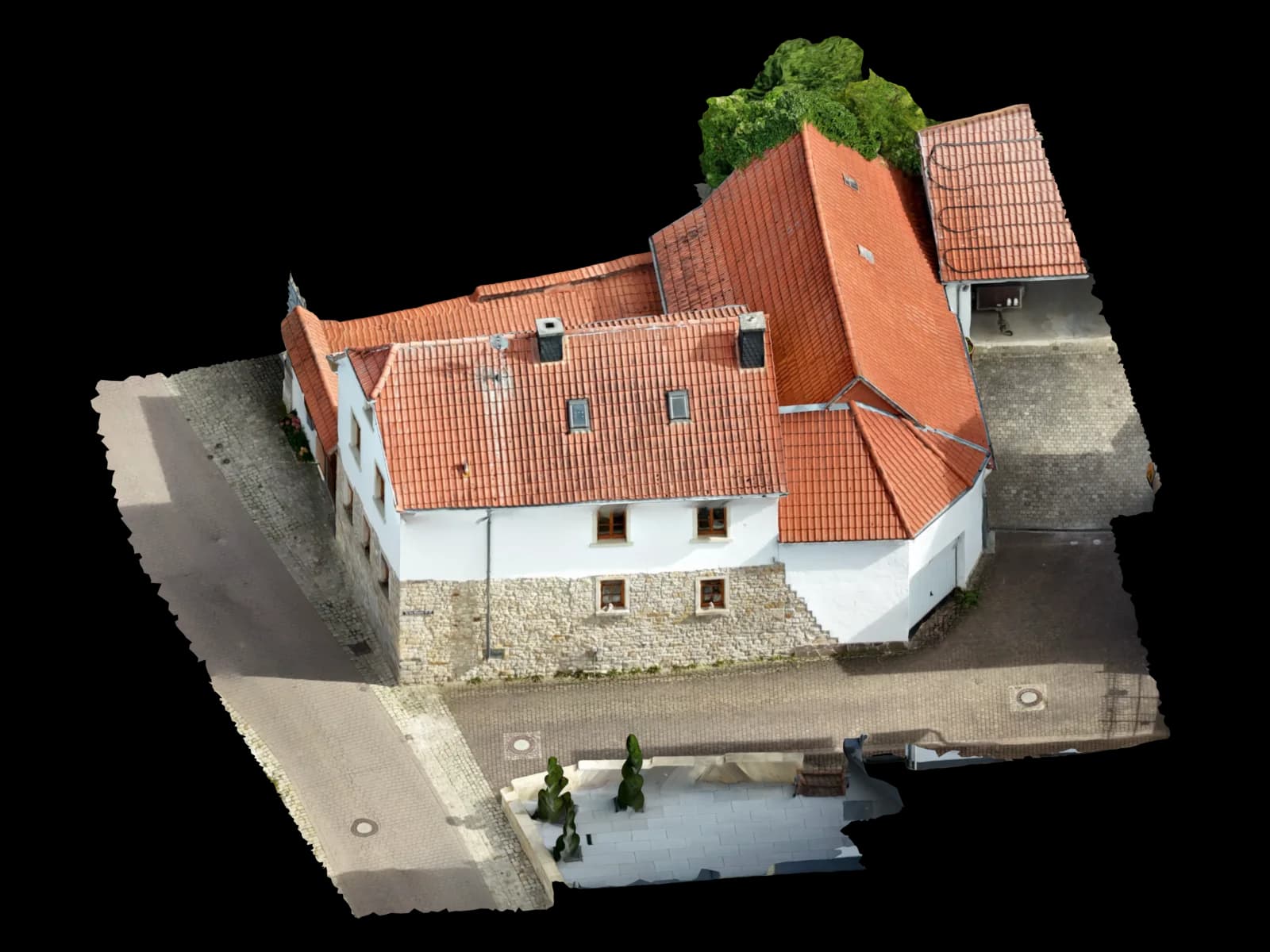
Technologies Compared: Drones vs. Laser Scanning vs. Manual
There are several ways to capture a building and lay the foundation for a Digital Twin. Each technology has different strengths in cost, accuracy, speed, and suitability.
| Method | Drone Photogrammetry | Terrestrial Laser Scanning (TLS) | Manual Measurement |
|---|---|---|---|
| Accuracy | ±1–3 cm | ±1–5 mm | ±5–10 cm |
| Capture Time (Building) | 20–30 min | 4–8 hours | 10–20 days |
| Equipment Costs | €1,000–8,000 | €50,000–100,000 | €500–2,000 |
| Project Costs | €2,000–8,000 | €8,000–30,000 | €3,000–15,000 |
| Facades Capturable? | Yes (exterior) | Yes (exterior + interior) | Manual only |
| Roof Areas Capturable? | Yes, ideal | Only from ladders | Difficult |
| Interior Spaces Capturable? | No (exterior only) | Yes, excellent | Yes, manual |
| Mesh Quality | Very good | Excellent | Low |
| Ideal for | Fast exterior capture, solar analysis, roof area surveying | Highest accuracy, facade details, architecture documentation | Small buildings, budget solutions, low complexity |
Step-by-Step Creation of a Digital Twin
A Digital Twin does not emerge from a single action but follows a structured workflow. Here are the 6 critical phases:
Phase 1: Inventory & Planning. Before technical capture, clarify requirements: What accuracy is needed? Which rooms and areas must be captured? Do you need interior spaces or just exterior? Which operational data should be integrated later (heating, ventilation, electricity)? Which software will be used? Timeline: 1–2 weeks planning.
Phase 2: Drone Flight or Laser Scanning. Through drone photogrammetry or terrestrial laser scanning, a high-resolution raw capture is created. Drones create hundreds of overlapping aerial images; laser scanners generate millions of measurement points. Timeline: 1–2 days. Accuracy ±1–3 cm (drones) or ±1 mm (laser scanning).
Phase 3: Point Cloud Processing. Raw data (images or scans) is converted into a coherent point cloud. This is typically done automatically with Structure-from-Motion (SfM) software like Agisoft Metashape or Pix4D. The point cloud is a representation of the building as millions of 3D coordinates. Timeline: 2–6 hours processing time, depending on data volume.
Phase 4: 3D Modeling and Mesh Generation. The point cloud is converted into a structured 3D model. Triangulated meshes (surfaces made of triangles) are created and geometry is cleaned. Modern tools like Metashape or CloudCompare automatically reduce noise and fill gaps. Timeline: 4–12 hours. Result: A high-precision 3D building model (OBJ, PLY, or FBX format).
Phase 5: Data Enrichment and BIM Integration. The model is imported into BIM software (Revit, ArchiCAD, Autodesk Tandem). Semantic information is added: component assignments, materials, lifecycle costs, maintenance plans, energy data. Sensors are integrated (IoT devices for temperature, humidity, CO2, energy consumption). Timeline: 1–3 weeks (depending on model size and data complexity).
Phase 6: Commissioning and Continuous Updates. The Digital Twin goes into operation. It receives live sensor data, documents maintenance, predicts failures, and supports operational decisions. Data is regularly updated (daily, weekly, or monthly, depending on use case). For major renovations, a new capture is performed. Timeline: Ongoing, typically 2–3 years ROI amortization.
Software Ecosystem for Digital Twins
Creating and managing a Digital Twin requires a combination of capture, modeling, and operational software. Here is an overview of the key platforms:
| Software | Type | Price | Features |
|---|---|---|---|
| Autodesk Revit + Tandem | BIM Platform | From €700/year (Revit), Tandem variable | 3D Modeling · BIM Standard · Real-time Sensor Integration · Facility Management · Cloud Data Storage |
| Bentley iTwin | Digital Twin Platform | From €1,000/year (license model) | Cloud-based Digital Twin Management · Reality Mesh Integration · IoT Sensors · Real-time Visualization · DACH Data Storage |
| Agisoft Metashape | Photogrammetry Software | €3,500–5,000 (one-time purchase) | Automatic Point Cloud Generation · Mesh & Orthophoto Generation · RTK Integration · Batch Processing · High-Precision Measurements |
| Pix4D | Cloud Photogrammetry | €500–2,000/year (subscription) | Cloud Processing · Easy to Use · Drone Automation · GIS Integration · Orthophoto Export |
| ArchiCAD + Speckle | BIM + Collaboration | From €600/year + Speckle costs | 3D BIM Modeling · Open BIM (IFC) · Real-time Collaboration · Speckle Interoperability · Digital Twin Preparation |
| CloudCompare | Point Cloud Editor | Free (Open-Source) | Point Cloud Editing · Noise Reduction · Mesh Creation · GIS Data Integration · Batch Scripting |
Costs and ROI Analysis
Digital Twin costs vary greatly with building size, complexity, and approach (DIY vs. full-service). Here is a realistic cost framework based on current 2026 market prices:
| Category | DIY | Blended | Full-Service |
|---|---|---|---|
| Small Buildings (< 2,000 m²) | €2,000–5,000 | €3,000–7,000 | €5,000–10,000 |
| Medium Buildings (2,000–10,000 m²) | €8,000–15,000 | €12,000–25,000 | €20,000–40,000 |
| Large Buildings (> 10,000 m²) | €30,000–50,000 | €50,000–80,000 | €80,000–150,000 |
| Annual Maintenance & Updates | €500–1,500 | €1,500–3,500 | €3,500–8,000 |
ROI Calculation: A medium building (5,000 m²) costs approximately €15,000 for initial capture and BIM integration. Typical savings:
• 35% reduction in unplanned maintenance = €8,000–15,000/year (McKinsey)
• 20–30% energy savings = €5,000–12,000/year
• 10–15% reduction in downtime = €3,000–8,000/year (industry data)
Total annual savings: €16,000–35,000
Break-even point: 6–12 months. After break-even, each subsequent year is pure cost savings and operational efficiency gains.
Long-term perspective (5 years): €80,000–175,000 net savings after deducting initial investment and annual maintenance costs.
Standards and Regulations for Digital Twins
Digital Twin creation is bound by several international and European standards that standardize quality, data format, and processes. An overview:
| Standard | Scope | Focus |
|---|---|---|
| DIN SPEC 91391 | Digital Twins – Applications & Architecture | German standard for digital twin structure and application; describes data flows, interfaces, and best practices |
| ISO 19650 | BIM – Information Management | Internationally recognized BIM standard; regulates data structure, information flows, and compliance |
| VDI 2552 | BIM in Planning, Construction, and Operations | German standard rule set for BIM; concretizes BIM application in planning and operational processes |
| IFC (Industry Foundation Classes) | Open Data Exchange Standard for BIM | Enables interoperability between BIM tools (Revit, ArchiCAD, etc.); foundation for open BIM |
| ISO 23601 | BIM & Digital Twins – Governance & Management | Describes organizational and process requirements for digital twins in organizations |
| EN 17757 | Digital Product Passports & Building Certificates | European standard for documenting building properties and lifecycle data |
Future: AI, IoT, and Predictive Maintenance
The next generation of Digital Twins will be defined by AI algorithms, comprehensive IoT sensors, and predictive analytics. Here are the 4 key future trends:
| Trend | Description | Impact |
|---|---|---|
| AI-Powered Defect Detection | Computer vision AI models automatically analyze 3D models and images for damage, wear, or deviations. Example: automatic crack analysis in facades, moisture detection, material degradation. This reduces manual inspections by 60–80%. | Savings: €3,000–8,000/year for large buildings | Time savings: 100–200 hours/year of inspection work |
| IoT Sensor Integration (Real-Time Monitoring) | Thousands of sensors (temperature, humidity, electricity, water, CO2, motion) are integrated into the Digital Twin. The twin becomes a "living model" that continuously receives state data and detects anomalies. | Energy savings: 15–30% through predictive HVAC control | Water savings: 10–20% through leak detection | Failure prevention: 40–50% reduction in emergency repairs |
| Predictive Maintenance (Forecast Maintenance) | Machine learning predicts failures of operational equipment (heating, cooling, elevators, etc.) days or weeks in advance. Maintenance is planned rather than reactive. Example: An elevator motor can statistically run 45 more days — maintenance is optimally scheduled. | Maintenance costs: −40–50% through planned vs. emergency maintenance | Availability: +30–40% due to fewer downtimes |
| AR-Assisted Maintenance & Remote Troubleshooting | Technicians view the Digital Twin via AR glasses and receive live data overlaid on the physical building. A cloud-based remote expert can help via video streaming and AR annotation. This decentralizes expertise and reduces on-site time. | Repair time: −30–40% through better diagnosis | Trip savings: −50% via remote guidance | Staff efficiency: +40% per technician |