
Why camera calibration is critical for CAD, BIM, PV, and orthophoto work
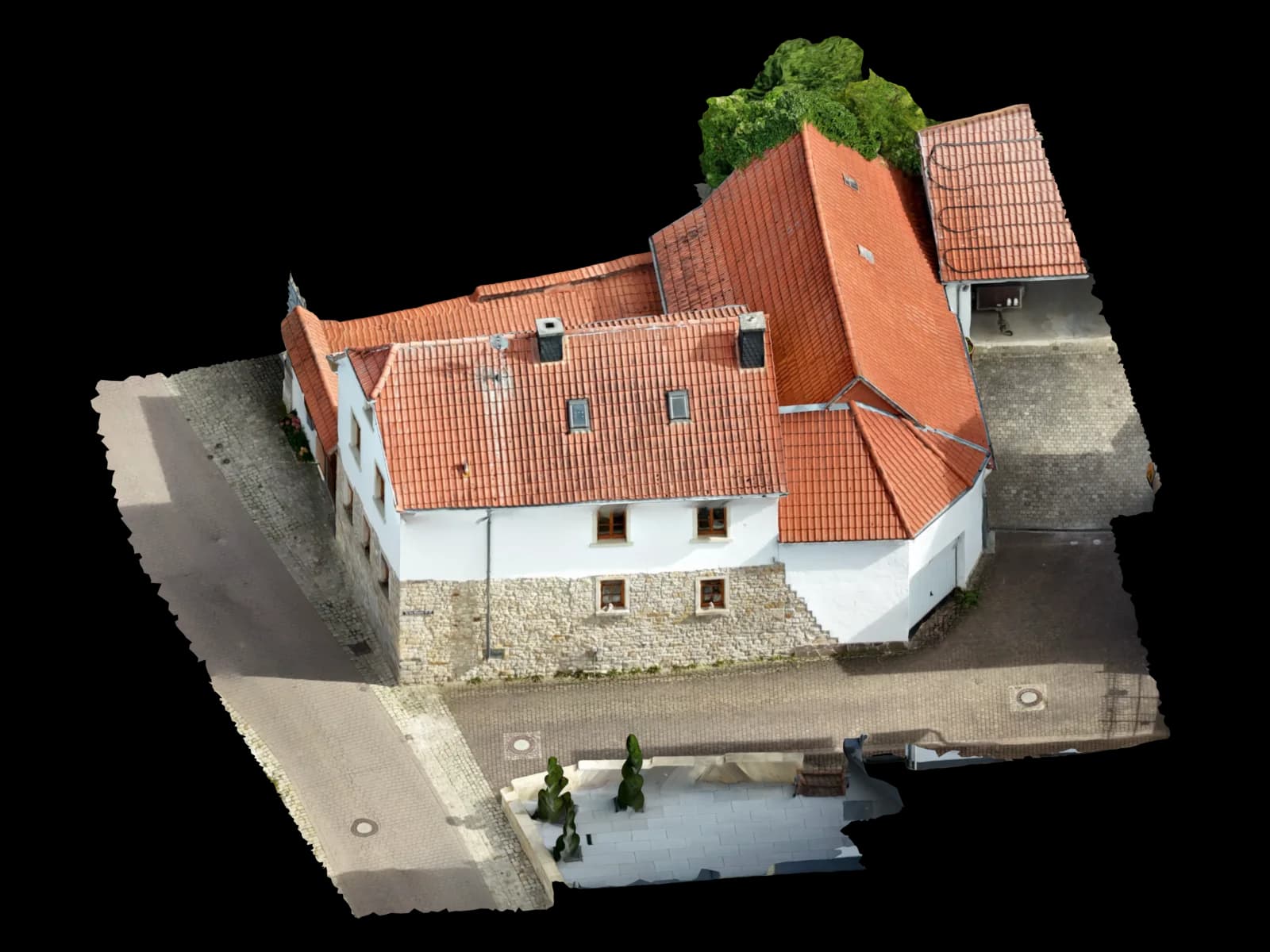
[Photogrammetry](/ratgeber/photogrammetrie-leitfaden-2026) reconstructs 3D geometry from overlapping images. If camera modeling is wrong, geometry drifts: edges soften, planes bend, and measurements become unstable.
OpenCV defines the baseline: camera matrix terms plus distortion coefficients are needed for consistent geometry. COLMAP confirms the same from SfM: models that are too simple underfit, models that are too complex can overfit and destabilize reconstruction.
For Voxelia, this means we evaluate calibration readiness first, then decide the right delivery from the same imagery: viewer, mesh, [point cloud](/ratgeber/e57-las-rcp-punktwolke-cad-bim), roof model, DXF/DWG, or BIM-oriented output.
Calibration parameters that matter in real projects
OpenCV separates intrinsics and distortion terms: focal lengths in pixels (fx, fy), principal point (cx, cy), radial terms, and tangential terms.
Agisoft documents the same operationally: focal length, principal point, and distortion must fit the image series; inconsistent [metadata](/ratgeber/exif-xmp-metadaten-photogrammetrie) or geometry-altering edits reduce autocalibration robustness.
COLMAP camera models and practical model-selection logic
COLMAP recommends starting with simpler models and increasing complexity only when residual distortion remains. This avoids overfitting that can look good numerically but harm geometry.
For wide-angle and fisheye data, COLMAP explicitly recommends dedicated fisheye models. This is especially relevant for mixed smartphone/drone datasets.
When supplied data is sufficient and when recapture is smarter
Many datasets can be processed without recapture when [overlap](/ratgeber/bildqualitaet-photogrammetrie), sharpness, and lens behavior are consistent.
Risk rises with strongly mixed focal lengths, heavily edited images, or weak angular coverage on critical geometry.
Voxelia workflow from supplied imagery to calibrated planning outputs
We prioritize technical usability over visual-only reconstructions and define output targets before processing.
2026 primary-source basis used for this guide
This guide is based on current COLMAP camera-model documentation (March 2026), OpenCV 4.x calibration documentation, Agisoft Metashape calibration guidance (2026 update), and Pix4D calibration/quality documentation.